Polyethylene furan-2,5-dicarboxylate CAS#: 28728-19-0

By Christina Duan,
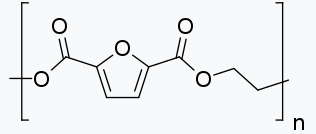
structure of Polyethylene furan-2,5-dicarboxylate CAS 28728-19-0
IdentificationPhysical DataSpectra
Route of Synthesis (ROS)Safety and HazardsOther Data

Identification

英文名Polyethylene furan-2,5-dicarboxylate
CAS编号 28728-19-0
Structure structure of Polyethylene furan-2,5-dicarboxylate CAS 28728-19-0
别名Polyethylene 2,5-furandicarboxylate;PEF;Poly (2,5-Furanedioic Acid Glycol Ester)

Physical Data

AppearanceYellow particles
Viscosity0.7-0.75

Spectra

No data available


Route of Synthesis (ROS)

No data available


Safety and Hazards

No data available


Other Data

StorageStore at room temperature for long time, in container tightly sealed and protect from light.
Shelf Life1 year
Use Pattern
Polyethylene furan-2,5-dicarboxylate CAS#: 28728-19-0 also named poly(ethylene furan-2,5-dicarboxylate), polyethylene furanoate and poly(ethylene furanoate) and generally abbreviated as PEF, is a polymer that can be produced by polycondensation or ring-opening polymerization of 2,5-furandicarboxylic acid (FDCA) and ethylene glycol.As an aromatic polyester from ethylene glycol it is a chemical analogue of polyethylene terephthalate (PET) and polyethylene naphthalate (PEN). PEF has been described in (patent) literature since 1951, but has gained renewed attention since the US department of energy proclaimed its building block, FDCA, as a potential bio-based replacement for purified terephthalic acid (PTA) in 2004.

Dimethyl Furan-2,5-dicarboxylate CAS#: 4282-32-0

By great_watson-int,
IdentificationPhysical DataSpectra
Route of Synthesis (ROS)Safety and HazardsOther Data

Identification

英文名Dimethyl furan-2,5-dicarboxylate
IUPAC Namedimethyl furan-2,5-dicarboxylate
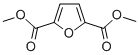
分子结构
CAS编号 4282-32-0
别名FDME, furan-2,5-dicarboxylic acid dimethyl ester, 2,5-furan-dicarboxylic acid dimethyl ester, dimethyl furan-2,5-dicarboxylic acid ester, 2,5-furandicarboxylic acid dimethyl ester, 2-methyl 5-methyl furan-2,5-dicarboxylate, 2,5-furandicarboxylic acid methyl ester, furan-2,5-dicarboxylic dimethyl ester
分子式C8H8O5
分子量184.149
InChIInChI=1S/C8H8O5/c1-11-7(9)5-3-4-6(13-5)8(10)12-2/h3-4H,1-2H3
InChI KeyUWQOPFRNDNVUOA-UHFFFAOYSA-N
Canonical SMILESCOC(=O)C1=CC=C(O1)C(=O)OC
Patent Information
Patent IDTitlePublication Date
CN108299357Method for preparing disubstituted furan compound2018
JP2017/1903162, 5 – furan dicarboxylic acid purification method (by machine translation) 2017
WO2016/186504PROCESS FOR THE PREPARATION OF AN AROMATIC DICARBOXYLIC ACID 2016
WO2016/202858PROCESSES FOR THE FORMATION OF FURANDICARBOXYLIC ACID (FDCA) VIA A MULTISTEP BIOCATALYTIC OXIDATION REACTION OF 5-HYDROXYMETHYLFURFURAL (HMF) 2016
WO2015/60827METHODS AND COMPOUNDS FOR PRODUCING NYLON 6,62015
US2014/171663PROCESS FOR THE PREPARATION OF BENZENE DERIVATIVES FROM FURAN DERIVATIVES 2014
WO2013/49711METHODS FOR PREPARING 2,5-FURANDICARBOXYLIC ACID 2013
US4327209Process for the production of dibenzazolyl compounds1982
US2003/176641Synthetic ion channels2003
US2012/220507 2,5-FURAN DICARBOXYLATE DERIVATIVES, AND USE THEREOF AS PLASTICIZERS 2012
WO2008/9735PYRAZOLO (3, 4-B) PYRIDINE DERIVATIVES AS PDE4 INHIBITORS2008
US44579241,1-Alkanediol dicarboxylate linked antibacterial agents1984

Physical Data

AppearanceWhite or off white powder
Flash Point117.6°C
Density1.244g/m³
Melting Point, °C Solvent (Melting Point)
109 – 113
112chloroform, hexane
110 – 115ethyl acetate, hexane
110methanol
109 – 110ethanol
109petroleum ether
Boiling Point, °CPressure (Boiling Point), Torr
140 – 14510
154 – 15615
Description (Electrochemical Characteristics)Solvent (Electrochemical Characteristics)Temperature (Electrochemical Characteristics), °C
reduction potentialtetrahydrofuran-74
polarographic current/voltage curve

Spectra

Description (NMR Spectroscopy)Nucleus (NMR Spectroscopy)Solvents (NMR Spectroscopy)Frequency (NMR Spectroscopy), MHz
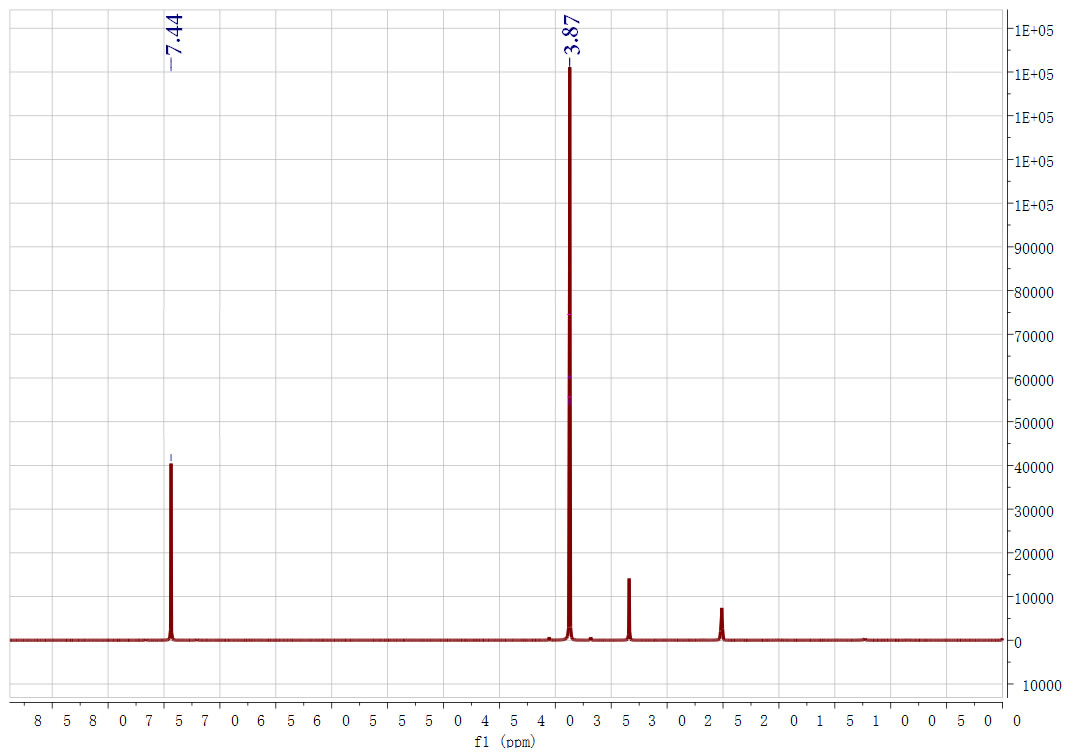
Chemical shifts1Hchloroform-d1 400
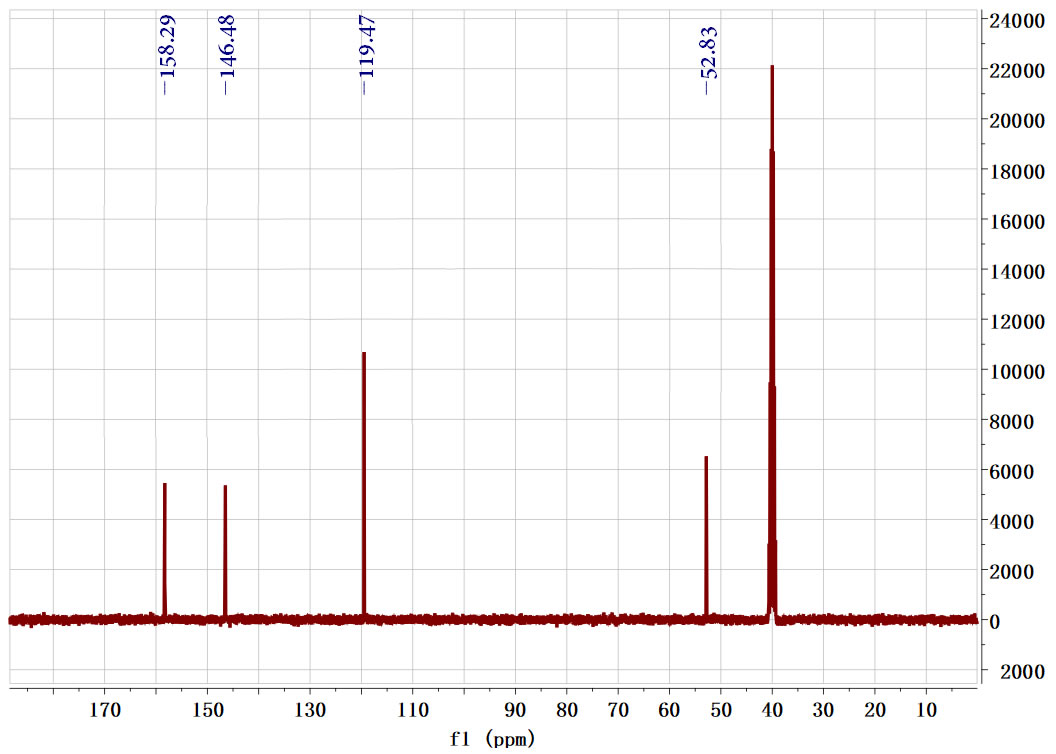
Chemical shifts 13Cchloroform-d1100
Dimethyl Furan-2,5-dicarboxylate CAS#: 4282-32-0 HNMRDimethyl  Furan-2,5-dicarboxylate CAS#: 4282-32-0 HNMR
Dimethyl Furan-2,5-dicarboxylate CAS#: 4282-32-0 CNMR Dimethyl Furan-2,5-dicarboxylate CAS 4282-32-0 CNMR
Description (IR Spectroscopy)Solvent (IR Spectroscopy)Comment (IR Spectroscopy)
Bandspotassium bromide
Bandssodium chloridefilm
Chromatographic dataOriginal string
UPLC (Ultra performance liquid chromatography)Large spikes at about 4.30 minutes and at 6.059 minutes, respectively, indicate formation of monoester and diesters, with someresidual FDCA at about 2.75 minutes.
TLC (Thin layer chromatography)

Route of Synthesis (ROS)

Route of Synthesis of Dimethyl Furan-2,5-dicarboxylate CAS 4282-32-0
ConditionsYield
In methanol at 20℃ under 3450.35 Torr for 19h

Experimental Procedure
Preparation of dimethyl FDCA from methyl 5-formyl-2- furoate: A 15 niL glass liner was charged with a magnetic stirring bar, methyl 5- formyl-2-furoate (117 mg, 0.76 mmol), methanol (10 mL) and sodium methoxide (4 mg, 0.076 mmol) to give a clear solution. A 1.2 wtpercent Au/Ti02 (41.5 mg, 2.53 μιηο Au) catalyst was added to give a purple suspension and the vial was placed in a 75 mL Parr Hastelloy C-276 reactor. The reactor was closed and flushed 3x with compressed air and then pressurized at 4.6 bar. Stirring was started (600 rpm) and the reaction was allowed to proceed at room temperature. After 19 h, the reaction had consumed 0.25 bar of air and the reactor was opened. The reaction mixture was filtered over Celite to remove the catalyst, which was washed with a httle methanol and dichlorom ethane. The combined organic layers were washed with water, dried over MgS04, filtered, and the solvent was removed under reduced pressure. 2,5-FDCA dimethyl ester was obtained as light yellow crystals (106 mg, yield 76percent). The product was analyzed by H/^C-NMR and GC-MS. Analytical data: NMR (400.17 MHz, CDC13): δ = 7.22 (2 H, s), 3.94 (6 H, s). i3C NMR (100.62 MHz, CDCI3): δ = 52.33, 118.41, 153.86, 158.37. MS (GC-MS, 70eV): m/z (percent) = 184 (32) [M+], 153 (100), 139 (1), 125 (6), 113 (1), 95 (8), 82 (2), 69 (6), 59 (9), 53 (4), 38 (9).
76%
With oxygen In methanol at 20℃ under 3750.38 Torr for 19h

Safety and Hazards

Pictogram(s)exclamation-mark
SignalWarning
GHS Hazard StatementsH302: Harmful if swallowed [Warning Acute toxicity, oral]
H312: Harmful in contact with skin [Warning Acute toxicity, dermal]
H315: Causes skin irritation [Warning Skin corrosion/irritation]
H319: Causes serious eye irritation [Warning Serious eye damage/eye irritation]
H332: Harmful if inhaled [Warning Acute toxicity, inhalation]
H335: May cause respiratory irritation [Warning Specific target organ toxicity, single exposure; Respiratory tract irritation]
Precautionary Statement CodesP261, P264, P270, P271, P280, P301+P312, P302+P352, P304+P312, P304+P340, P305+P351+P338, P312, P321, P322, P330, P332+P313, P337+P313, P362, P363, P403+P233, P405, and P501
(The corresponding statement to each P-code can be found at the GHS Classification page.)

Other Data

TransportationNot dangerous goods
Under the room temperature and away from light
HS Code294200
StorageUnder the room temperature and away from light
Shelf Life2 years
Market PriceUSD 520/kg
Use Pattern
raw material for high-performance epoxy
raw material for high-performance polyamide
raw material for high-performance polyester
raw material for high-performance polyurethane
raw material for high-performance resin

5-Hydroxymethylfurfural CAS#: 67-47-0

By great_watson-int,
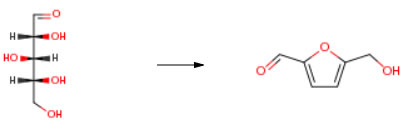
5-Hydroxymethylfurfural-CAS-67-47-0
IdentificationPhysical DataSpectra
Route of Synthesis (ROS)Safety and HazardsOther Data

Identification

英文名5-Hydroxymethylfurfural
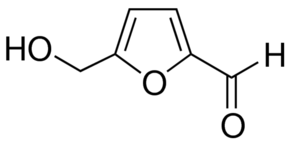
IUPAC Name5-(hydroxymethyl)furan-2-carbaldehyde
分子结构5-Hydroxymethylfurfural-CAS-67-47-0
CAS编号 67-47-0
EINECS Number200-654-9
MDL NumberMFCD00003234
Beilstein Registry Number110889
Flavis Number13.139
别名5-hydroxymethyl-2-furfuraldehyde, 5-hydroxymethylfurfural, 5-HMF
分子式C6H6O3
分子量126.112
InChIInChI=1S/C6H6O3/c7-3-5-1-2-6(4-8)9-5/h1-3,8H,4H2
InChI KeyNOEGNKMFWQHSLB-UHFFFAOYSA-N
Canonical SMILESC1=C(OC(=C1)C=O)CO
Patent Information
Patent IDTitlePublication Date
US9938548Process for preparing (meth)acrylic esters of functionalized furyl alcohols 2018
JP2018/193353The furan derivative2018
JP6168044Tetrahydrofuran compound2017
JP2016/37486Method of manufacturing hydroxytetrahydrofuran compd. (by machine translation)2016
US2016/339414PROCESS FOR THE PREPARATION OF 2, 5-DIMETHYLEFURAN AND FURFURYL ALCOHOL OVER RUTHENIUM SUPPORTED CATALYSTS 2016
WO2016/195115SUPPORTED CATALYST FOR ALDEHYDE COUPLING REACTION, METHOD FOR PERFORMING ALDEHYDE COUPLING REACTION, AND METHOD FOR REGENERATING SUPPORTED CATALYST FOR ALDEHYDE COUPLING REACTION2016

Physical Data

AppearanceYellow or off-yellow solid
Melting Point28-34 °C
Flash Point79 °C
SolubilitySoluble in water, alcohol, ethyl acetate, acetone, dimethylformamide, benzene, ether and chloroform.
SensitivityAir & Light Sensitive
StabilityLight Sensitive, Very Hygroscopic
Boiling Point, °CPressure (Boiling Point), Torr
114-1161
1100.02
900.0225023
85 – 880.01
120 – 1250.3
154 – 15512
140 – 1427
Refractive IndexWavelength (Refractive Index), nmTemperature (Refractive Index), °C
1.5658920
1.55958925
1.562758918
1.553358925
1.552656.339
Density, g·cm-3Reference Temperature, °CMeasurement Temperature, °C
1.2622525
1.2062425
1.2681515
1.2629436

Spectra

Description (NMR Spectroscopy)Nucleus (NMR Spectroscopy)Solvents (NMR Spectroscopy)Temperature (NMR Spectroscopy), °C Frequency (NMR Spectroscopy), MHz
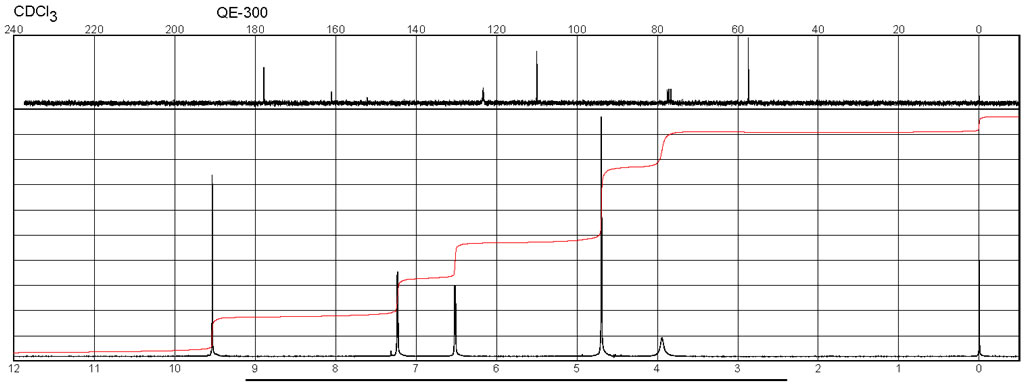
Chemical shifts1Hchloroform-d125500
Chemical shifts 13Cchloroform-d125125
5-Hydroxymethylfurfural CAS#: 67-47-0 NMR5-Hydroxymethylfurfural CAS#: 67-47-0 NMR
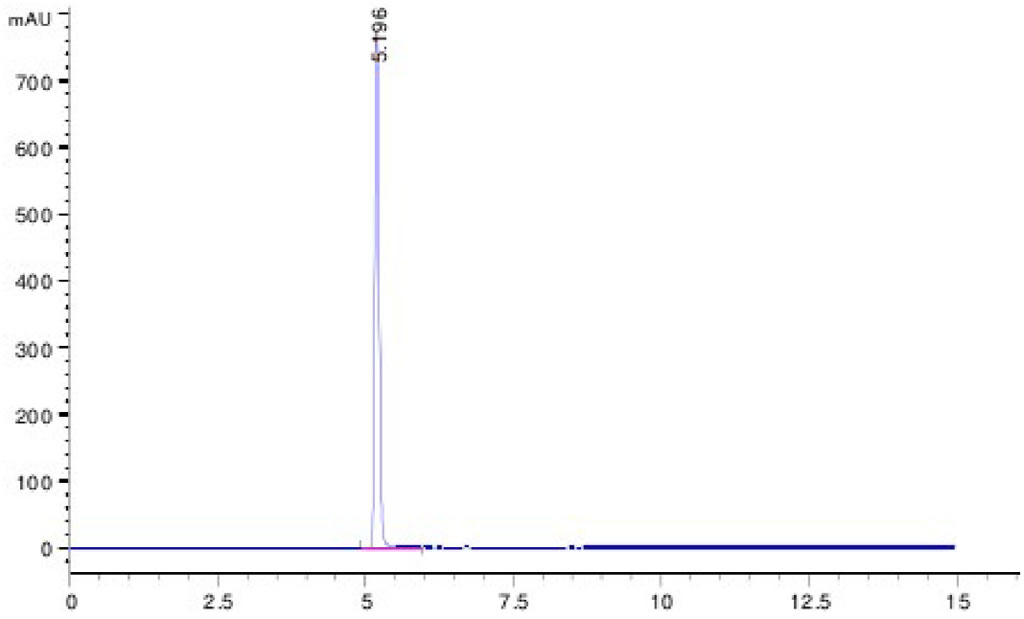
5-Hydroxymethylfurfural CAS#: 67-47-0 HPLC 5-Hydroxymethylfurfural CAS#: 67-47-0 HPLC
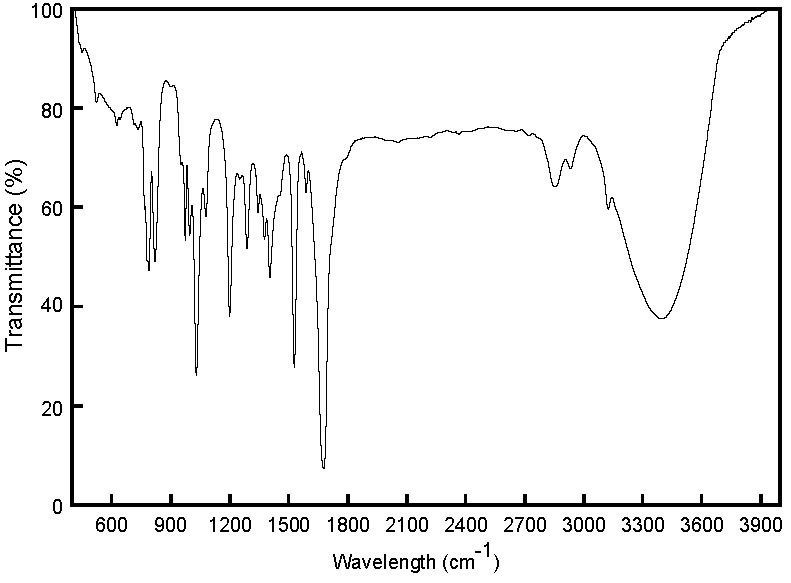
Description (IR Spectroscopy)Solvent (IR Spectroscopy)
Bandsneat (no solvent)
Bandsdimethyl sulfoxide, isopropyl alcohol
Bands, Spectrumpotassium hydroxide
5-Hydroxymethylfurfural CAS#: 67-47-0 IR 5-Hydroxymethylfurfural CAS#: 67-47-0 IR
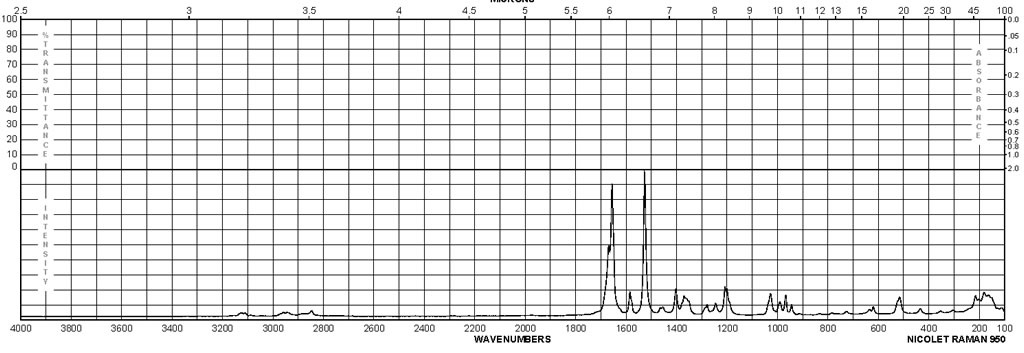
5-Hydroxymethylfurfural CAS#: 67-47-0 Raman5-Hydroxymethylfurfural CAS#: 67-47-0 Raman
Description (UV/VIS Spectroscopy)Solvent (UV/VIS Spectroscopy)Absorption Maxima (UV/VIS), nm
Spectrumwater284
Absorption maximaethanol278
Absorption maximamethanol221, 281

Route of Synthesis (ROS)

Route of Synthesis (ROS) of 5-Hydroxymethylfurfural CAS 67-47-0
ConditionsYield
With phosphoric acid; potassium dihydrogen phosphate In water; iso-butanol at 143℃; under 4500.45 Torr; for 3h; Concentration; Temperature; Reagent/catalyst; Inert atmosphere;

Experimental Procedure
reaction was carried out in the same manner as in Example 1 except that 1.501 g of D (+) xylose (10.0 mmol) was used as the sugar raw material and the reaction time was changed to 3.0 hours.After the reaction, the 2-butanol layer was transferred to a 100 ml Erlenmeyer flask, and the aqueous layer was washed three times with 10 ml of 2-butanol, and these washing solutions were collected in the flask.1.0 ml of diethylene glycol diethyl ether (internal standard substance for GC analysis) and 1 g of calcium hydroxide (for removing residual acid) were added to the recovered 2-butanol solution, and then mixed.The mixture was filtered through 2 C filter paper, and the filtrate was subjected to GC analysis to determine the amount of 2-furaldehyde (FAL) produced.The results are shown in Table 6.
75%
With chromium dichloride; N-benzyl-N,N,N-triethylammonium chloride In ethylene glycol at 100℃; for 0.5h;

Experimental Procedure
Organic ammonium salt and diethylene glycol solvent were mixed, and various carbohydrates were converted to HMF using catalyst.[0038]Choline chloride (Example 6-1 and 6-2) or benzyltriethylammonium chloride (BTEAC, used in Example 6-3) was used as organic ammonium salt, diethylene glycol was used as hydroxyl organic solvent, CrCl2 (Example 6-1 and 6-3) or CrCl3.6H2O (Example 6-2) was used as catalyst, and sucrose, starch or xylose was used as carbohydrate in Example 6. Organic ammonium salt was mixed with diethylene glycol solvent at the ratio 75 mol percent and heated to 100° C. to form a solution. The solution was mixed with sucrose, starch or xylose, and 6 mol percent catalyst (with amount based on the mole of the carbohydrate) was added. The reactions were conducted at the temperature of 100° C., for sucrose, 120° C. for starch, and 100° C. for xylose, respectively. And sucrose, starch, or xylose was converted to the product HMF. The experimental conditions and the experimental results of HMF yields in the Example 6 are listed in Table 7. The yield of HMF can reach 69percent in Example 6-1.
51%
With SiO2-MgCl2 composite In acetonitrile at 180℃; for 1.5h; Autoclave;17%
With Aluminosilicate beta zeolite calcined at 500 °C In tetrahydrofuran; water; dimethyl sulfoxide at 180℃; for 3h; Time; Autoclave;
With sulfonated graphene quantum dots In water; dimethyl sulfoxide at 170℃; for 2h;

Safety and Hazards

Pictogram(s)exclamation-mark
SignalWarning
GHS Hazard StatementsH315: Causes skin irritation [Warning Skin corrosion/irritation]
H319: Causes serious eye irritation [Warning Serious eye damage/eye irritation]
H335: May cause respiratory irritation [Warning Specific target organ toxicity, single exposure; Respiratory tract irritation]
H412: Harmful to aquatic life with long lasting effects [Hazardous to the aquatic environment, long-term hazard]
Information may vary between notifications depending on impurities, additives, and other factors.
Precautionary Statement CodesP261, P264, P271, P273, P280, P302+P352, P304+P340, P305+P351+P338, P312, P321, P332+P313, P337+P313, P362, P403+P233, P405, and P501
(The corresponding statement to each P-code can be found at the GHS Classification page.)

Other Data

TransportationNot dangerous goods
Under the room temperature and away from light
HS Code293219
StorageUnder the room temperature and away from light
Shelf Life1 year
Market PriceUSD 380/kg
Use Pattern
hair dye cell growth promoter and hair dermal papilla cell growth promoter
Cosmetics/dental/toilet
enhanced neuronal function involving elevated levels of pCREB and/or Egr1
the preparation of 2,5-furandicarboxylic acid and esters thereof
in certain dried fruits and caramel products, juces from dried plums

2,5-Furandicarboxylic acid CAS#: 3238-40-2

By great_watson-int,
IdentificationPhysical DataSpectra
Route of Synthesis (ROS)Other DataApproved Manufacturers

Identification

英文名2,5-Furandicarboxylic acid
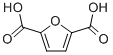
分子结构
CAS编号 3238-40-2
别名FDCA; 2,5-Furandicarboxylic acid; Furan-2,5-dicarboxylic acid; 3238-40-2; Dehydromucic acid; Furan-2,5-dicarbonsaeure; 2,5-Furandicarboxylic acid
分子式C6H4O5
分子量156.095
InChIInChI=1S/C6H4O5/c7-5(8)3-1-2-4(11-3)6(9)10/h1-2H,(H,7,8)(H,9,10)
InChI Key CHTHALBTIRVDBM-UHFFFAOYSA-N
Canonical SMILES C1=C(OC(=C1)C(=O)O)C(=O)O
Patent Information
Patent IDTitlePublication Date
CN108299357Method for preparing disubstituted furan compound2018
JP2017/1903162, 5 – furan dicarboxylic acid purification method (by machine translation)2017
WO2016/186504PROCESS FOR THE PREPARATION OF AN AROMATIC DICARBOXYLIC ACID2016
WO2016/202858PROCESSES FOR THE FORMATION OF FURANDICARBOXYLIC ACID (FDCA) VIA A MULTISTEP BIOCATALYTIC OXIDATION REACTION OF 5-HYDROXYMETHYLFURFURAL (HMF)2016
WO2015/60827METHODS AND COMPOUNDS FOR PRODUCING NYLON 6,62015
WO2014/65657PROCESS FOR THE PREPARATION OF BENZENE DERIVATIVES FROM FURAN DERIVATIVES2014
US2014/171663PROCESS FOR PRODUCING COMPOUNDS COMPRISING NITRILE FUNCTIONS2014
WO2013/49711METHODS FOR PREPARING 2,5-FURANDICARBOXYLIC ACID2013
US4327209Process for the production of dibenzazolyl compounds1982
US2003/176641Synthetic ion channels2003
US2012/2205072,5-FURAN DICARBOXYLATE DERIVATIVES, AND USE THEREOF AS PLASTICIZERS2012
WO2008/9735PYRAZOLO (3, 4-B) PYRIDINE DERIVATIVES AS PDE4 INHIBITORS2008
US44579241,1-Alkanediol dicarboxylate linked antibacterial agents1984

Physical Data

AppearanceUltra-white powder
Water SolubilitySlightly soluble(1.87e-02 g/L)
Melting Point340 – 345 °C
Sublimation320-322grad
Density1.73 g/cm3 at 20°C (68°F)
Water Solubility0.899 g/l at 20°C (68°F) – partly soluble
Partition Coefficient: Noctanol/Waterlog Pow: < -1.429 at 20°C (68°F)
Decomposition Temperature250°C (482°F) min
StabilityLight sensitive, very Hygroscopic

Spectra

Description (NMR Spectroscopy)Nucleus (NMR Spectroscopy)Solvents (NMR Spectroscopy)Temperature (NMR Spectroscopy), °CFrequency (NMR Spectroscopy), MHz
Spectrum1H[D3]acetonitrile 24.94400
Chemical shifts, Spectrum1Hdimethylsulfoxide-d624.84250
Chemical shifts, Spectrum13Cdimethylsulfoxide-d626.8475.5
Chemical shifts 13Cdimethylsulfoxide-d624.84125
2,5-Furandicarboxylic acid CAS#: 3238-40-2 HNMR2,5-Furandicarboxylic acid CAS#: 3238-40-2 HNMR
2,5-Furandicarboxylic acid CAS#: 3238-40-2 CNMR2,5-Furandicarboxylic acid CAS#: 3238-40-2 CNMR
Description (IR Spectroscopy)Solvent (IR Spectroscopy)Comment (IR Spectroscopy)
Bandsnujol3250 – 1285 cm**(-1)
BandsKBr 3100 – 1420 cm**(-1)
Bandsnujol3300 – 1575 cm**(-1)
2,5-Furandicarboxylic acid CAS#: 3238-40-2 IR2,5-Furandicarboxylic acid CAS 3238-40-2 IR
Chromatographic dataOriginal string
HPLC (High performance liquid chromatography)20.7 min
HPLC (High performance liquid chromatography)(retention time at 37 min)
Description (UV/VIS Spectroscopy)Solvent (UV/VIS Spectroscopy)Absorption Maxima (UV/VIS), nm
Absorption maximaethanol263
Absorption maximaH2O264
Description (Crystal Phase)Comment (Crystal Phase)
Crystal structure determinationβ=96 grad, a=4.97 Angstroem, b=16.69 Angstroem, c=3.66 Angstroem, n=2., aus dem Roentgen-Diagramm.

Route of Synthesis (ROS)

Route of Synthesis (ROS) of 2,5-Furandicarboxylic acid CAS 3238-40-2
ConditionsYield
Stage #1: 2-furanoic acid With potassium carbonate; caesium carbonate In water Green chemistry
Stage #2: carbon dioxide at 260 – 285℃ under 6000.6 Torr for 24h Flow reactor Green chemistry
Stage #3: With hydrogenchloride In water pH=2 Reagent/catalyst Pressure Temperature Green chemistry
89%
Stage #1: 2-furanoic acid With potassium carbonate In water
Stage #2: carbon dioxide With potassium acetate; sodium acetate at 280℃ under 6000.6 Torr for 24h Autoclave

Experimental Procedure
Into a 100 ml flask, 1.12 g (10 mmol) of furancarboxylic acid, 0.7 g (5 mmol) of potassium carbonate, and 10 ml of water were successively added. The obtained aqueous solution of potassium furancarboxylate was clarified, and the aqueous solution was evaporated to dryness under reduced pressure to give a solid powder of potassium salt of white furfuric acid. In a 100 ml high temperature and high pressure autoclave, the above prepared potassium salt of furancarboxylate, anhydrous potassium carbonate 3.45 g (25 mmol), mixed potassium acetate and sodium acetate 5.0 g (the quality of potassium acetate and sodium acetate) were respectively added. The ratio is 1:1). After the addition, the air in the reaction vessel was replaced by carbon dioxide. Then, while maintaining a certain gas flow, the pressure of carbon dioxide was maintained at 0.8 MPa, and the reaction was carried out at 280 ° C for 24 hours, and the conversion rate was 95%. After the reaction is completed, 100 ml of deionized water is added to the reaction system to obtain a brown transparent solution. 0.2 g of activated carbon is added to the mother liquid, and the mixture is stirred at 50 ° C for 30 minutes, and filtered while hot, and the obtained colorless aqueous solution is hydrochloric acid. Acidification to a pH of about 2, a large amount of white precipitate formed, vacuum filtration, vacuum drying, and recrystallization from water to give pure 2,5-furandicarboxylic acid. The pure 2,5-furandicarboxylic acid prepared in Example 1 of the present invention was characterized, and the obtained 2,5-furandicarboxylic acid was subjected to nuclear magnetic resonance analysis using deuterated DMSO as a solvent. Referring to Fig. 1, Fig. 1 is a nuclear magnetic resonance spectrum of pure 2,5-furandicarboxylic acid prepared in Example 1 of the present invention. It can be seen from Fig. 1 that the pure 2,5-furandicarboxylic acid prepared by the invention has no obvious impurity peak, and the purity by NMR is ≥99%. The yield of the pure 2,5-furandicarboxylic acid prepared in Example 1 of the present invention was 80%.
80%
With sodium oxalate; potassium hydroxide at 280℃ under 75007.5 Torr for 8h Temperature Pressure Reagent/catalyst 76%
Stage #1: 2-furanoic acid With n-butyllithium; diisopropylamine In tetrahydrofuran; hexane for 1.3h Inert atmosphere Sealed tube
Stage #2: carbon dioxide In tetrahydrofuran; hexane at -78 – 0℃ for 0.5h Inert atmosphere Sealed tube
Stage #3: With hydrogenchloride In water at 80℃ for 2h Inert atmosphere Sealed tube
73%

Other Data

TransportationNot dangerous goods
Under the room temperature and away from light
HS Code294200
StorageUnder the room temperature and away from light
Shelf Life2 years
Market PriceUSD 380/kg
Use Pattern
plasticizer
Monomer in a polymerisation process
Isolation from Natural Product
Phomopsis long (Deem.) Trav.
Occurrence and determination in excretion in the urine of humans before and after administration of Ca-gluconate, galactose or mesoinositol
from urine of humans