4-(HYDROXYMETHYL)PHENYLACETIC ACID CAS#: 73401-74-8; 凯望编码 (ChemWhat Code): 1119205

Identification
| 英文名 | 4-(HYDROXYMETHYL)PHENYLACETIC ACID |
| IUPAC Name | 2-[4-(hydroxymethyl)phenyl]acetic acid |
| 分子结构 | 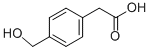 |
| CAS编号 | 73401-74-8 |
| NACRES | NA.22 |
| MDL Number | MFCD00065692 |
| 别名 | 4-hydroxymethylphenylacetic acid, 4-Hydroxymethylphenylacetic acid, 2-(4-(hydroxymethyl) phenyl) acetic acid, 2-(4-(hydroxymethyl)phenyl)acetic acid, 2-[4-(hydroxymethyl)phenyl]acetic acid, [4-(hydroxymethyl)phenyl]acetic acid, 4-(hydroxymethyl)phenylacetic acid |
| 分子式 | C9H10O3 |
| 分子量 | 166.177 |
| InChI | InChI=1S/C9H10O3/c10-6-8-3-1-7(2-4-8)5-9(11)12/h1-4,10H,5-6H2,(H,11,12) |
| InChI Key | FWZBPBKAANKOJQ-UHFFFAOYSA-N |
| Canonical SMILES | C1=CC(=CC=C1CC(=O)O)CO |
| Patent Information | ||
| Patent ID | Title | Publication Date |
| US2014/121250 | ALKYLAMIDOTHIAZOLES, COSMETIC OR DERMATOLOGICAL PREPARATIONS CONTAINING SAID ALKYLAMIDOTHIAZOLES, AND USE THEREOF TO COMBAT OR PREVENT UNDESIRED PIGMENTATION OF THE SKIN | 2014 |
| US2014/161736 | COMPOUNDS HAVING MUSCARINIC RECEPTOR ANTAGONIST AND BETA2 ADRENERGIC RECEPTOR AGONIST ACTIVITY | 2014 |
| WO2013/52110 | NOVEL MOLECULES THAT SELECTIVELY INHIBIT HISTONE DEACETYLASE 6 RELATIVE TO HISTONE DEACETYLASE 1 | 2013 |
| US2002/173051 | Solid phase synthesis supports and methods | 2002 |
Physical Data
| Appearance | White to off-white powder |
| Melting Point, °C |
| 128.5 – 129 |
| 131-134 |
Spectra
| Description (NMR Spectroscopy) | Nucleus (NMR Spectroscopy) | Solvents (NMR Spectroscopy) | Frequency (NMR Spectroscopy), MHz | Original Text (NMR Spectroscopy) |
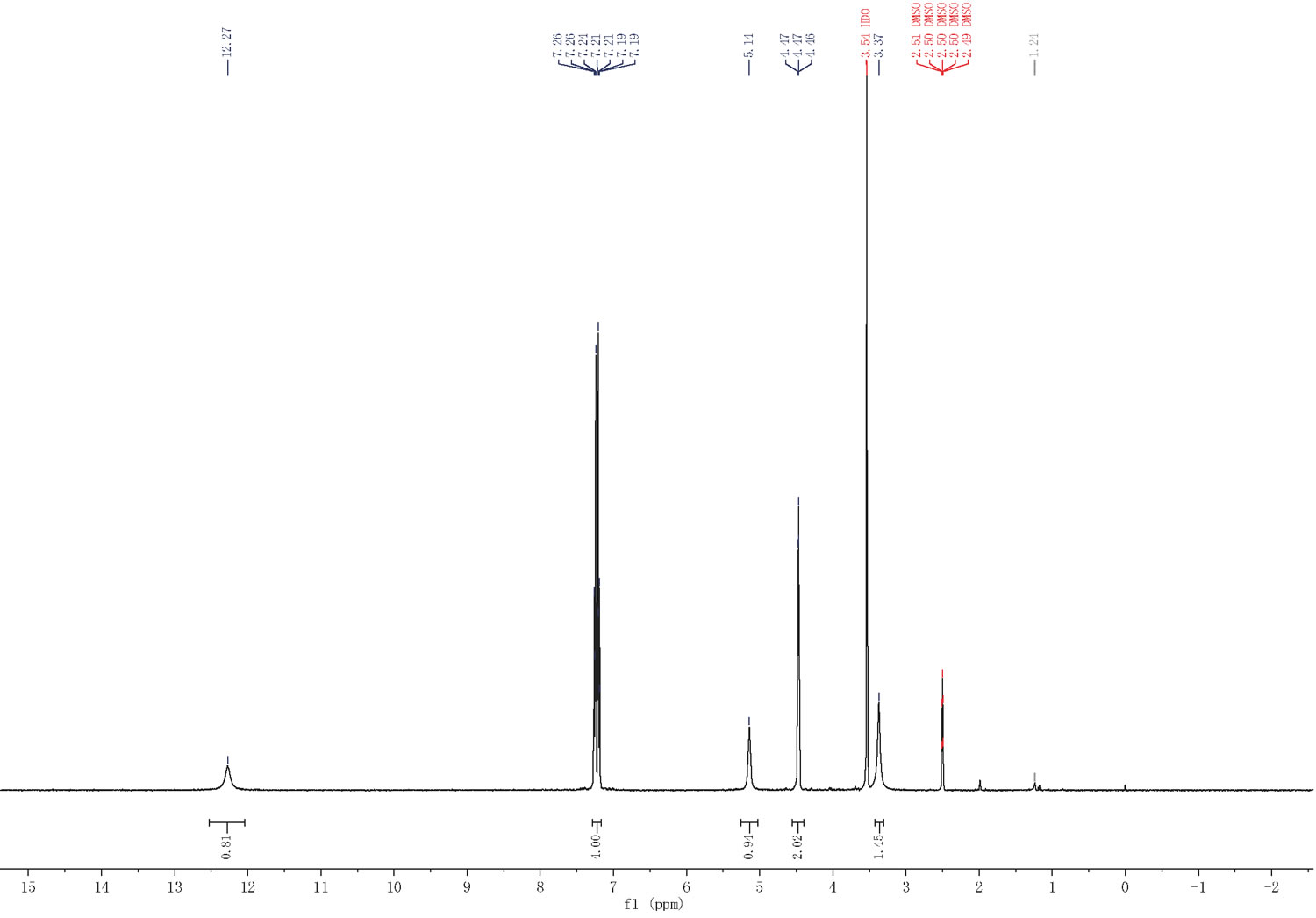
| Chemical shifts | 1H | dimethylsulfoxide-d6 | 300 | 1H NMR (300 MHz, DMSO-d6) δ 12.27 (s, 1H), 7.26-7.12 (m, 4H), 5.14 (s, 1H), 4.47 (s, 2H), 3.53 (s, 2H). |
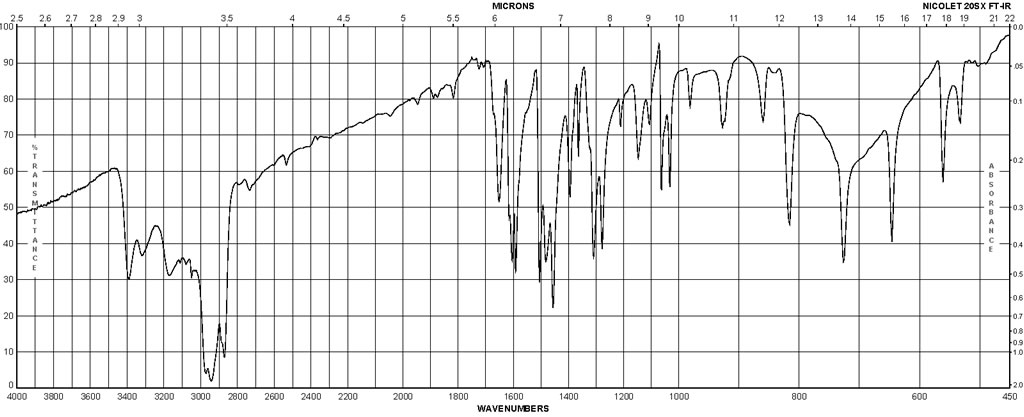
| Original Text (IR Spectroscopy) |
| νmax cm-1: 3304, 1703, 1520, 1421, 1408, 1360, 1288, 1234, 1200, 1188, 1009 |
Route of Synthesis (ROS)

| Conditions | Yield |
| With sodium hydroxide In water at 18 – 25℃; Large scale; Experimental Procedure 1 2-(4-(Hydroxymethyl)phenyl)acetic acid (C) 2-(4-(Hydroxymethyl)phenyl)acetic acid (C) To a solution of NaOH (1.61 kg, 40.2 mol, 4 eq) in water (90 L) was added B (2.3 kg, 10.0 mol, 1 eq) and the resulting mixture was stirred at RT overnight. TLC analysis indicated consumption of B. The reaction mixture was then carefully acidified with concentrated H2SO4 (1.0 L) to pH˜2. Then, solid NaCl (25 kg) was added to the mixture followed by extraction with EtOAc (33 L3). The combined organic phase was washed with brine, dried over Na2SO4, and concentrated until a significant amount of solid precipitated. The resulting suspension was kept at ˜4-6° C. overnight to allow for further crystallization. The solid product was then collected by filtration. The filter cake was washed with petroleum ether (2 L2) to yield the title compound (1.2 kg, yield: 71.9%). HPLC purity: 97.8% (220 nm); 1H NMR (300 MHz, DMSO-d6) δ 12.27 (s, 1H), 7.26-7.12 (m, 4H), 5.14 (s, 1H), 4.47 (s, 2H), 3.53 (s, 2H). | 71.9% |
| With sodium hydroxide In water at 20℃; Large scale; Experimental Procedure 1 2-(4-(Hydroxymethyl)phenyl)acetic acid (C): To a solution of NaOH (1.61 kg, 40.2 mol, 4 eq) in water (90 L) was added B (2.3 kg, 10.0 mol, 1 eq) and the resulting mixture was stirred at RT overnight. TLC analysis indicated consumption of B. The reaction mixture was then carefully acidified with concentrated H2SO4 (1.0 L) to pH ~2. Then, solid NaCl (25 kg) was added to the mixture followed by extraction with EtOAc (33 L x 3). The combined organic phase was washed with brine, dried over Na2S04, and concentrated until a significant amount of solid precipitated. The resulting suspension was kept at ~4-6°C overnight to allow for further crystallization. The solid product was then collected by filtration. The filter cake was washed with petroleum ether (2 L x 2) to yield the title compound (1.2 kg, yield: 71.9%). HPLC purity: 97.8% (220 nm); 1H NMR (300 MHz, OMSO-d6) δ 12.27 (s, 1H), 7.26-7.12 (m, 4H), 5.14 (s, 1H), 4.47 (s, 2H), 3.53 (s, 2H). | 71.9% |
| With sodium hydroxide; sodium chloride; sodium acetate In water Experimental Procedure 44.i 44(i) 44(i) 4-Hydroxymethylphenylacetic acid A solution of 9.00 g (39.3 mmol) of p-bromomethylphenylacetic acid, 3.14 g (78.6 mmol) of sodium hydroxide and 3.54 g (43.2 mmol) of sodium acetate in 40 ml of water was stirred for 4 hours at 100° C. At the end of this time, it was cooled to room temperature and then acidified with 2N aqueous hydrochloric acid. It was then extracted with ethyl acetate. The extract was washed with a saturated aqueous solution of sodium chloride. The organic phase was dried over anhydrous sodium sulfate, and the solvent was removed by distillation under reduced pressure. The resulting residue was recrystallized from a mixture of ethyl acetate and methylene chloride to give 3.60 g (yield 55%) of the title compound, melting at 136°-137° C. Infrared Absorption Spectrum (KBr) νmax cm-1: 3304, 1703, 1520, 1421, 1408, 1360, 1288, 1234, 1200, 1188, 1009. | 55% |
| With water for 2h; Reflux; Experimental Procedure 1 Synthetic compound 3 Compound 2 (50 g) was added to 200 ml of water,Stir and heat to reflux for 2 hours,Anti-strain clarification,Then cool to room temperatureThe ice bath cooled to about 2 degrees,A white solid precipitated and was filtered. The cake was washed twice with water to give a white solid.The white solid was dried at 50[deg.] C. for 10 hours to yield about 33 g of compound 3. | 33g |
Safety and Hazards
| Pictogram(s) |  |
| Signal | Warning |
| GHS Hazard Statements | H315: Causes skin irritation [Warning Skin corrosion/irritation] H319: Causes serious eye irritation [Warning Serious eye damage/eye irritation] H335: May cause respiratory irritation [Warning Specific target organ toxicity, single exposure; Respiratory tract irritation] Information may vary between notifications depending on impurities, additives, and other factors. |
| Precautionary Statement Codes | P261, P264, P271, P280, P302+P352, P304+P340, P305+P351+P338, P312, P321, P332+P313, P337+P313, P362, P403+P233, P405, and P501 (The corresponding statement to each P-code can be found at the GHS Classification page.) |
Other Data
| Transportation | Not dangerous goods |
| Under the room temperature and away from light | |
| HS Code | 291819 |
| Storage | Under the room temperature and away from light |
| Shelf Life | 1 year |
| Market Price |
| Druglikeness | |
| Lipinski rules component | |
| 分子量 | 166.177 |
| logP | 0.638 |
| HBA | 3 |
| HBD | 2 |
| Matching Lipinski Rules | 4 |
| Veber rules component | |
| Polar Surface Area (PSA) | 57.53 |
| Rotatable Bond (RotB) | 3 |
| Matching Veber Rules | 2 |
| Use Pattern |
| 4-(HYDROXYMETHYL)PHENYLACETIC ACID CAS#: 73401-74-8 is usually as a linker in peptide synthesis. |
试剂采购 | |
| 没有试剂厂商? | 向凯望发送快速询价 |
| 想要被列为试剂厂商? (付费服务) | 点击这里联系凯望 |
认证生产商 | |
| Apnoke Scientific Ltd | http://www.apnoke.com/ |
| 想要被列为认证生产商 (需要通过认证)? | 请下载并填写 这份表格并发邮件到approved-manufacturers@chemwhat.com |
其他供应商 | |
| Watson International Limited | 访问Watson官网 |
如需其他帮助,请联系我们 | |
| 联系我们获取其它信息或服务 | 点击这里联系凯望 |