Anti-Vitamin B9 (Vitamin B9, VB9, Folic Acid, CAS#: 59-30-3) antibody; 凯望编码 (ChemWhat Code): 1393871

Antigen
| Name | Vitamin B9 |
| 别名 | 5 Methyl THFA; 5 Methyltetrahydrofolate; Folate; Tetrahydrofolate; Tetrahydrofolic acid; THFA; Folic Acid; 59-30-3 |
Description
| Name | Anti-Vitamin B9 antibody |
| Monoclonal Folic Acid antibody, Anti-Folic Acid antibody, Folate antibody, Vitamin M antibody, Vitamin B9 antibody, Vitamin Bc antibody, Folacin antibody, Pteroyl-L-glutamic acid antibody, Pteroyl-L-glutamate antibody | |
| Host | Mouse; Goat; Rabbit |
| Antibody Product Type | Primary |
| Conjugate | Unconjugated; Biotin; APC; Alkaline Phosphatase (AP); FITC; HRP; PE |
| Specifity | Recognizes free folic acid, otherwise known as Vitamin B9, a water-soluble vitamin found naturally in food. Folic acid is essential for production and maintenance of new cells particularly during pregnancy and infancy. Folate (the anion form of folic acid) functions in the synthesis of DNA bases, and folate deficiency limits cell division leading to megaloblastic anemia. Folic acid is particularly important just before and just after conception, to help protect against neural tube defects such as spina bifida. |
| Application | ELISA; Immunohistochemistry (IHC); Western Blotting (WB); Immunofluorescence (fixed cells) (IF/ICC); Immunoprecipitation (IP); Cell-ELISA (cELISA); Immunoassay (IA); Immunocytochemistry (ICC) |
Properties
| Form | Liquid/Lyophilized |
| Handling | The antibody solution should be gently mixed before use. |
| Storage Condition | Store at 4°C for frequent use. Stored at -20°C in a manual defrost freezer for a year without detectable loss of activity. Avoid repeated freeze-thaw cycles. |
| Clonality | Monoclonal/Polyclonal |
| Isotype | IgG |
Safety Information
| RIDADR | NONH for all modes of transport |
| WGK Germany | WGK 2 |
| Flash Point(F) | Not applicable |
| Flash Point(C) | Not applicable |
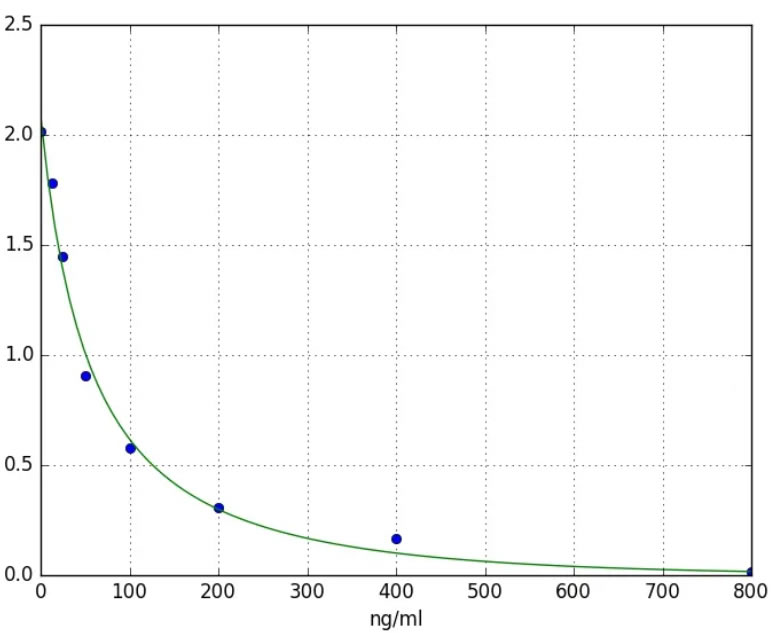
Images

Other Info
| About the antigen | Folic acid and Folate (the anion form) are forms of a water-soluble B vitamin. These occur naturally in food and can also be taken as supplements. The biologically active form of folic acid is tetrahydrofolic acid (THFA), which is derived by the 2-step reduction of folate involving dihydrofolate reductase. THFA plays a key role in the transfer of 1-carbon units (such as methyl, methylene, and formyl groups) to the essential substrates involved in the synthesis of DNA, RNA, and proteins. More specifically, THFA is involved with the enzymatic reactions necessary to synthesis of purines, thymidine, and amino acids. Manifestations of folate deficiency thereafter, not surprisingly, would involve impairment of cell division, accumulation of possibly toxic metabolites such as homocysteine, and impairment of methylation reactions involved in the regulation of gene expression, thus increasing neoplastic risks. Folate is necessary for the production and maintenance of new cells. This is especially important during periods of rapid cell division and growth such as infancy and pregnancy when a deficiency can result in neural tube defects. In folate deficiency the bone marrow is affected as it is a site of rapid cell turnover. Large red blood cells called megaloblasts are produced, resulting in megaloblastic anemia. |
Related Chemicals
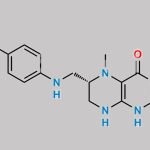
![Folic Acid Impurity 12 CAS#: N/A]()
Folic Acid Impurity 12 CAS#: N/A
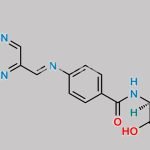
![Folic Acid EP Impurity C CAS#: 47707-78-8]()
Folic Acid EP Impurity C CAS#: 47707-78-8
![Folic Acid Impurity 16 CAS#: 857398-03-9]()
Folic Acid Impurity 16 CAS#: 857398-03-9
![Folic Acid Impurity 9 CAS#: N/A]()
Folic Acid Impurity 9 CAS#: N/A
![Folic Acid Impurity 4 CAS#: N/A]()
Folic Acid Impurity 4 CAS#: N/A
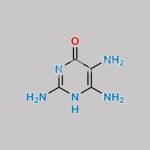
![Folic Acid EP Impurity B CAS#: 1004-75-7]()
Folic Acid EP Impurity B CAS#: 1004-75-7
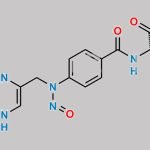
![N-Nitroso Folic acid Impurity 1 CAS#: 26360-21-4]()
N-Nitroso Folic acid Impurity 1 CAS#: 26360-21-4
![Folic Acid Impurity 7 CAS#: N/A]()
Folic Acid Impurity 7 CAS#: N/A
![Folic Acid Impurity 5 CAS#: N/A]()
Folic Acid Impurity 5 CAS#: N/A
![Folic Acid Impurity 8 CAS#: N/A]()
Folic Acid Impurity 8 CAS#: N/A
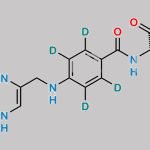
![Folic Acid D2 CAS#: 69022-87-3]()
Folic Acid D2 CAS#: 69022-87-3
![Folic Acid Impurity 8 CAS#: 2305206-68-0]()
Folic Acid Impurity 8 CAS#: 2305206-68-0
![Folic Acid D4 CAS#: 171777-72-3]()
Folic Acid D4 CAS#: 171777-72-3
![Folitixorin CAS#: 3432-99-3]()
Folitixorin CAS#: 3432-99-3

试剂采购 | |
| 没有试剂厂商? | 向凯望发送快速询价 |
| 想要被列为试剂厂商? (付费服务) | 点击这里联系凯望 |
认证生产商 | |
| 想要被列为认证生产商 (需要通过认证)? | 请下载并填写 这份表格并发邮件到approved-manufacturers@chemwhat.com |
其他供应商 | |
| Watson International Limited | 访问Watson官网 |
如需其他帮助,请联系我们 | |
| 联系我们获取其它信息或服务 | 点击这里联系凯望 |